In August, the new Minister of Municipal Affairs and Housing, Robert Flack, approved changes to encourage the construction of more apartments and condos near transit stations, and require new developments to include some affordable homes.
The new rules will increase density and raise maximum heights in the area surrounding 120 transit stations. Allowable density ranges from 20 to 30 stories on properties that can fit three or more buildings near some stations to four and six story buildings further away. The city has a map detailing the new rules for each train station. The province also gave permission for Toronto to implement its long-delayed inclusionary zoning policy to require big condo developments make up to five percent of the building's homes affordable for up to 25 years.
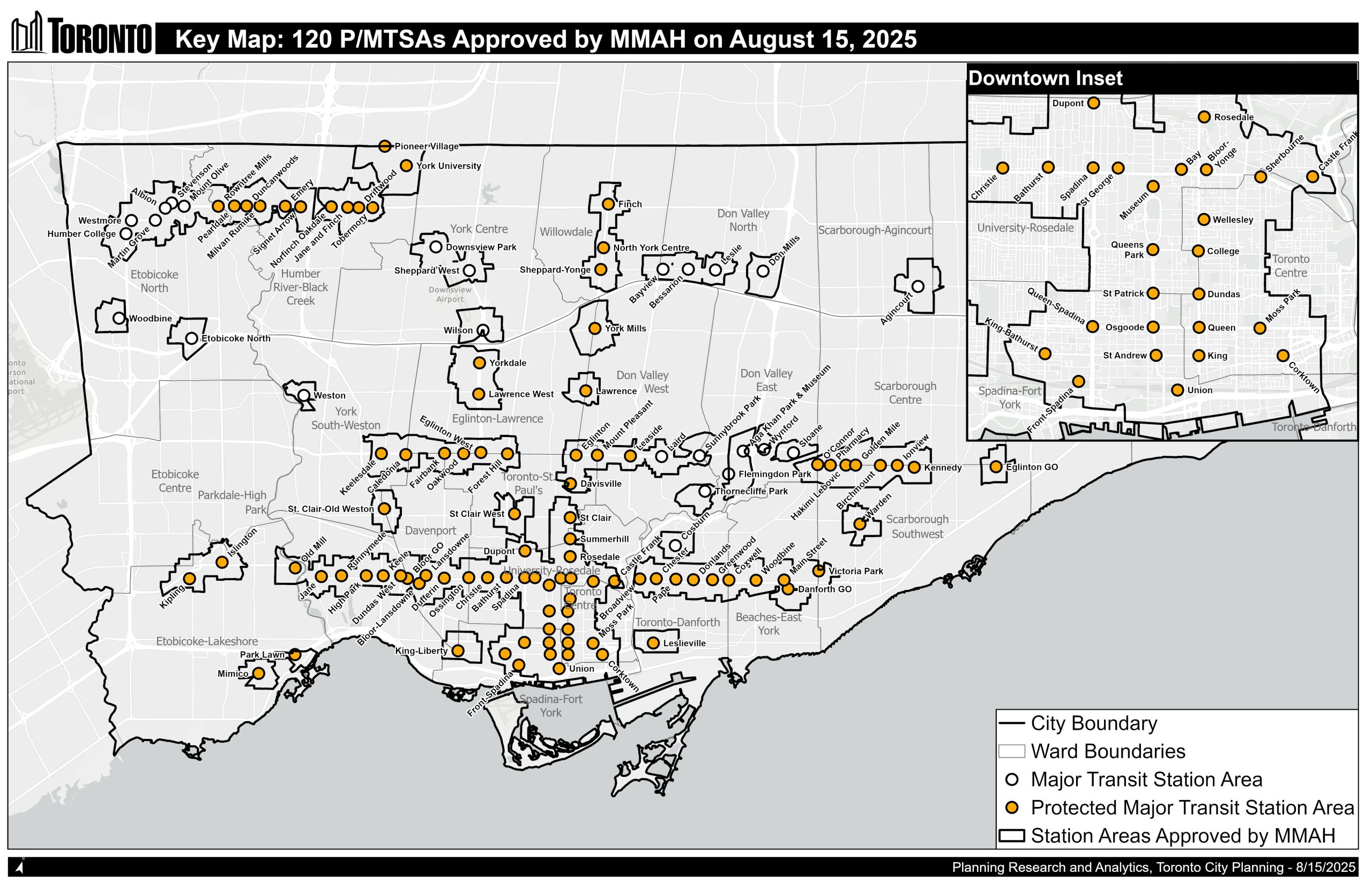
I have long advocated for increased density near transit stations and an effective inclusionary zoning policy because these rules will help address our housing affordability and housing supply needs. That said, I have some questions and concerns, and I am worried about some unintended consequences. How will these new rules impact the look and feel of Toronto? Who will benefit? Who’s missing out? What can we do to improve these rules to keep our city livable and affordable for existing and future residents?
Is this new Inclusionary Zoning policy ambitious enough? No. The province shouldn't have imposed a weaker inclusionary zoning policy than what the City of Toronto asked the province to approve four long years ago. The city's original inclusionary zoning law required developments to make up to 10 percent of homes affordable for 99 years, it applied to purpose built rentals and not just condos, and it extended across much of the city, not just near stations. These requirements were developed after extensive economic studies and public consultation to ensure developers got the height increases they needed to still make a decent profit margin. This is the policy we should be using, not the watered down version.
Am I eligible to live in one of these affordable homes? The province now yearly publishes the definition of affordability a developer must meet to be exempt from paying development charges on a home, and I expect that definition will be applied to the city's Inclusionary Zoning policy. That means, these homes will be affordable for low- and moderate-income households earning between $44,000 to $112,000 a year, depending on the size of the family. In Toronto in 2024, an “affordable” one-bedroom condo was $374,000, and an affordable two-bedroom apartment rents for $1985 a month.
How can you apply to live in these homes? Currently, it’s each developer’s responsibility to set up an application process for eligible people to apply. That means an eligible applicant would have to monitor development projects in the city, regularly scan developer websites for the application process, and then apply individually to each building under construction. And who's overseeing the process to make sure the application process is fair, and no one's just letting their friend's kids move in? No one. It would be better to have a centralized and transparent system run by the city so people who are eligible can apply and then automatically be eligible for all new available homes.
How do we ensure the new density aligns with Toronto's housing needs? With few rules dictating what size or type of homes are built, developers have built a glut of tiny bachelor and one-bedroom condos for investors, but underbuilt two and three bedroom homes, purpose-built rental, senior and student housing, and of course affordable housing. I would like to see the province give the city the power to put additional conditions on new buildings to require developers build some needed homes in each new development.
How do we protect existing tenants while making room for more people? With increased density comes increased development pressure to demolish and replace large rent-controlled purpose-built rental buildings with larger condos that are exempt from rent control.
Toronto has already approved the demolition of 4,000 rent-controlled homes, and this new policy will accelerate developer applications to demolish more, forcing thousands of people to move. Some will never return. This is gentrification, pure and simple. It's also strikingly unfair to have renters - the very victims of our housing crisis that we're striving to fix - be responsible for shouldering the bulk of the harmful consequences of building more housing.
Ontario should bring in better policies to protect existing tenants and preserve affordable private-market housing. There should be a moratorium on demolishing purpose built rentals. Strong rent control should be applied to all rental homes, including new buildings. And the province should also bring in rules so evicted-tenants can get fair compensation during construction so they can live in a nearby apartment, and bring in iron-clad rules to guarantee that all evicted-tenants can move back into a similar rent-controlled home in the newly constructed building.
Will these policies fix the city's homelessness crisis? Not a chance. These homes will not be affordable for the 81,000 people on the official City of Toronto waitlist for subsidized housing, nor the people living in ravines and encampments in Kensington, Rosedale Valley Road, or Dufferin Grove who desperately need supportive housing.
Governments at all levels need to implement immediate short term solutions to move people out of tents and into housing, while implementing the longer term plan of building, buying and investing in affordable housing, including building housing on public land.
I'm interested to see how these policies are developed and implemented, and I will be working with the community to maximize the good, and minimize the consequences of these significant new rules.