
Dear neighbour,
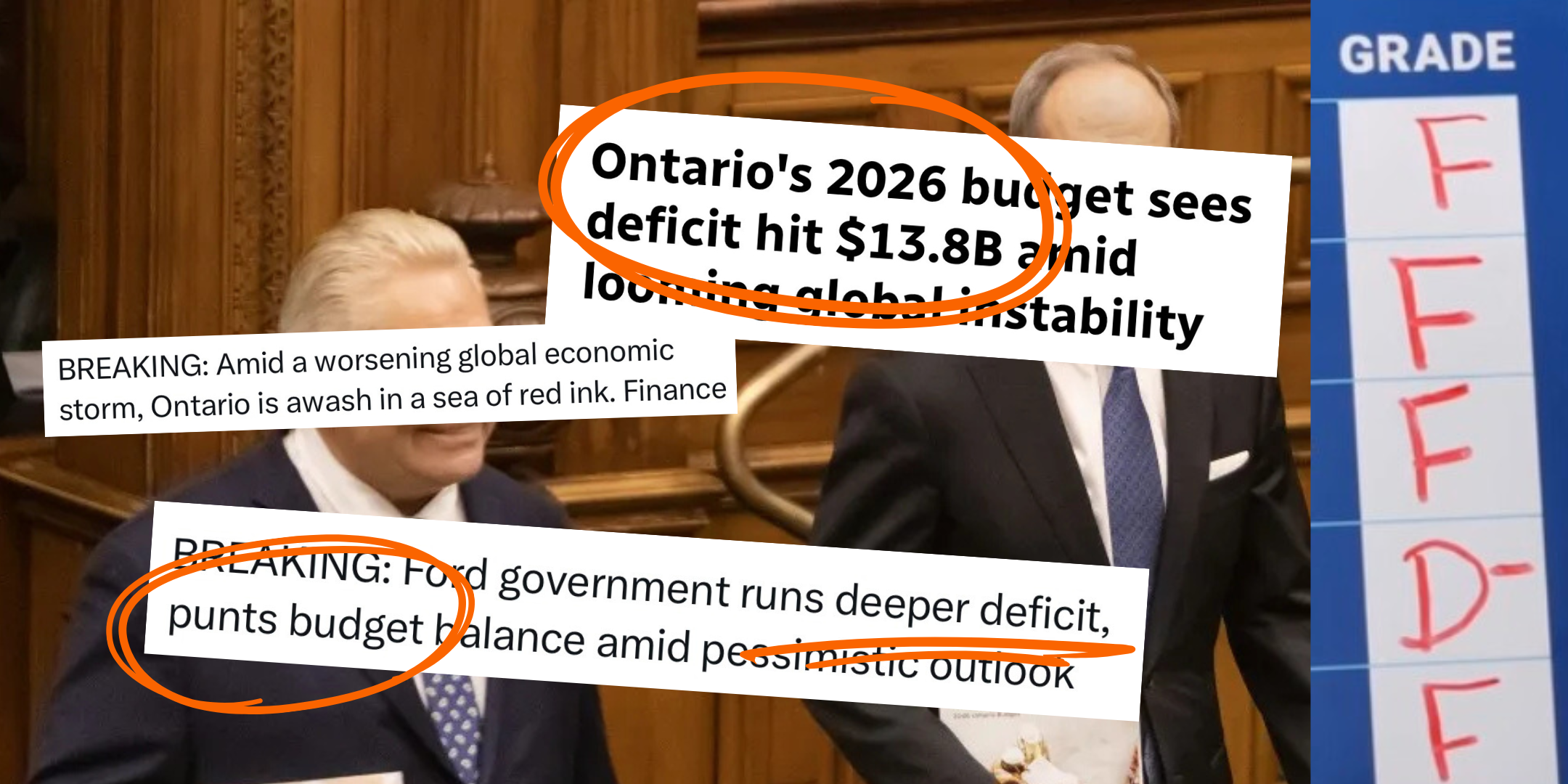
Last Thursday, the government introduced the 2026 budget. We have now had a week to carefully review the budget and my conclusion is the budget does not pass the test on the issues Ontarians care about - health care, housing, education, affordability and the environment. Here’s what you need to know about the budget.
- There is nothing meaningful to make life more affordable. We wanted to see measures to lower the rent and lower grocery prices. It’s not there. The budget doesn’t even mention the word groceries.
- Health care funding is up by 0.5%, well short of what is needed to maintain inadequate existing service levels.
- Education funding is up by 0.6%, well short of population growth and inflation. There is also an outright cut to infrastructure funding. The huge issues we see in schools will continue, from ultra large class sizes to teacher shortages.
- Housing starts continue to plummet. For 2026, it’s estimated to be 65,000, well short of what is needed. Funding to the Ministry of Municipal Affairs and Housing - which funds affordable housing - has been cut by $344.7M.
- $4.6B in new funding for post-secondary education. The government has also lifted the tuition freeze and changed the OSAP program from one that mostly provides grants to students to one that mostly provides loans - with interest. Despite the big increase in funding, Ontario remains dead last in per-student investment in post-secondary spending, and students in Ontario pay the highest tuition in the country.
- Small businesses are getting a tax cut from 3.2 to 2.2 percent, which will benefit approximately 350,000 small businesses.
- The budget deficit is $13B, putting Ontario on track to be $500B in debt by next year. This year, Ontario is paying $16 billion in interest.
- A new $4B Protect Ontario Account Investment Fund managed by a third-party to give money to big business. Investors can also now contribute to the fund. This looks like a corporate bailout. We have no idea if the government will impose conditions on these grants and loans, like job guarantees or a ban on executive bonuses.
- New laws to exempt the Premier, cabinet ministers, and their staff from being subject to Ontario’s freedom-of-information laws. This change comes shortly after the courts ruled the Premier must make his cell phone records public. What is the Premier trying to hide?
- Funding for a new Ferris wheel in Niagara, along with money to continue to study a tunnel under Hwy 401. These are the wrong priorities.
- Consolidates Ontario’s 36 Conservative Authorities into nine, making it harder for these authorities to protect the environment and deny irresponsible development.
- Prevents ticket sales from being resold at a higher price, banning price gouging. We pushed for this for a long time, and we’re pleased to see it’s going to become law.
For the first time in two years, the budget is going to committee. You can send written submissions or register to speak to the bill. Sign up here. When applying, select Bill 97.
Reach out to my office at [email protected] if you want to share your take on the budget. We are regularly sharing stories and issues in the legislature.
Sincerely,
Jessica Bell
MPP, University-Rosedale
In this newsletter:
- What we heard on the budget at our town hall
- New Bill 98: Housing, planning, and transit changes
- A budget that misses the basics
- Government’s $186 million sounds big, but does little to help kids waiting for autism support
- Conservatives refuse to do the right thing on OSAP
- Stephen Lewis: 1937-2026
- Parent Involvement Advisory Committee (PIAC)
What we heard on the budget at our town hall
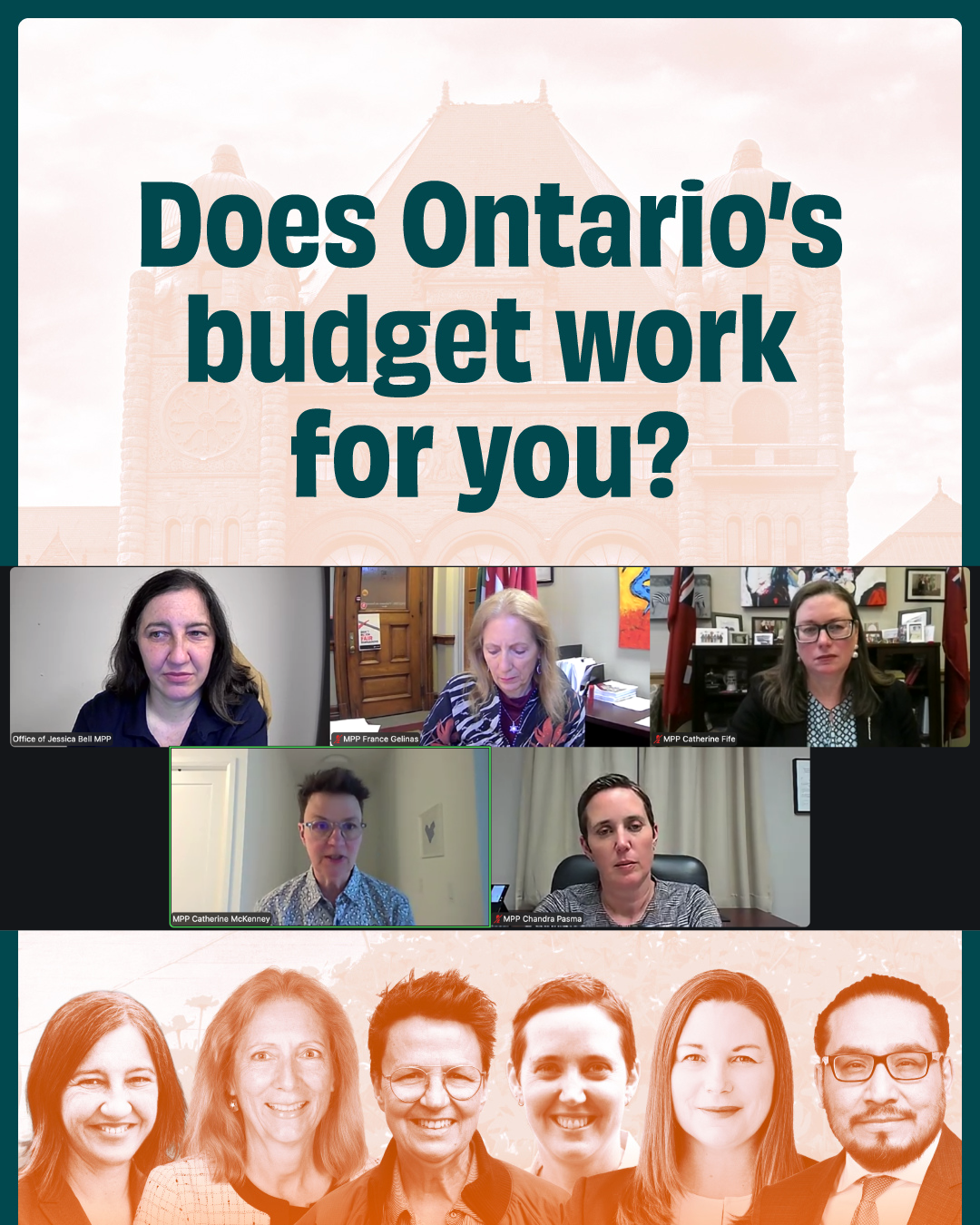
Thank you to everyone who joined our budget town hall on Monday, March 30.
I was joined by MPPs France Gélinas (Nickel Belt), Chandra Pasma (Ottawa West-Nepean), Catherine Fife (Waterloo), and Catherine McKenney (Ottawa Centre).
Together, we dissected what the budget means for healthcare, education, housing and the economy. We also responded to questions about child care, mental health and addiction, issues with hospital funding, the rise of for-profit care, and the impact of cutting HST off new housing.
Thank you to our panelists and to everyone who shared questions and experiences.
If you missed it, you can watch the full town hall by clicking the button below.
New Bill 98: Housing, planning, and transit changes
On Monday, March 30, the government introduced Bill 98, the Building Homes and Improving Transportation Infrastructure Act, 2026. This omnibus bill makes changes across housing, municipal planning, transit and infrastructure.
Bill 98 proposes significant changes to how municipalities plan and approve development. It introduces a standardized format for municipal official plans and limits what cities can require from developers. We are still reviewing the details of what this will mean for city planning.
Here’s the proposed regulations. Here’s Environmental Defence’s take.
The bill removes requirements for municipalities to include climate change mitigation and adaptation policies in their planning documents, including requirements for green roofs.
Changes to the Planning Act and City of Toronto Act limit municipalities' ability to require features like electric vehicle charging infrastructure and certain sustainable design elements in new developments.
The bill gives the province more control over transit, including the power to set fares, require a single fare system across regions, and coordinate service between transit agencies. In 2025, The TTC announced fare capping, where riders would stop paying after a certain number of trips in a month, with implementation expected in September 2026. It’s not yet clear how a province-wide fare system would affect that plan.
The bill increases penalties for fare evasion and includes measures to speed up transit project approvals. It does not restore provincial funding to cover 50% of municipal transit operating costs, something we have been calling for.
Finally, Bill 98 includes changes to set up new water and wastewater corporations to finance and manage infrastructure for new developments. It builds on legislation first introduced in Bill 60, Fighting Delays, Building Faster Act, 2025, that created this model. The bill clarifies that these corporations must remain publicly owned, though more details on how they will operate are still to come.
Bill 98 has been referred to committee. You can get involved by requesting to appear as a witness (with the option to submit written materials), or by submitting written comments.
Sign up here. When applying, select Bill 98
If you have feedback on the legislation, please reach out to my office at [email protected].
A budget that misses the basics
On Monday, March 30 during Question Period, I asked the Premier a simple question: why is he prioritizing pet projects instead of making life more affordable for Ontarians?
Families across Ontario are struggling with rising costs, and parents are worried about overcrowded classrooms and cuts in our schools.
What we see in this budget is money for a Ferris wheel in Niagara, even though Niagara already has one. But there is no meaningful measure to make life more affordable. Nothing to lower grocery prices or stop price gouging.
This government is failing people when they need help most. You can watch a clip of my question here or by clicking on the button below.
Government’s $186 million sounds big, but does little to help kids waiting for autism support
One of the headlines from the Conservatives’ budget released this week is a large-sounding $186 million in new funding for the Ontario Autism Program. On paper, this seems like the government is investing money where it matters and helping more children and families access specialized, dedicated services. But it’s not that simple.
During my online Budget Town Hall this week, my colleague MPP Chandra Pasma (Ottawa West-Nepean) - the Official Opposition’s Shadow Minister for Education, raised some pretty big red flags with this apparent cash commitment.
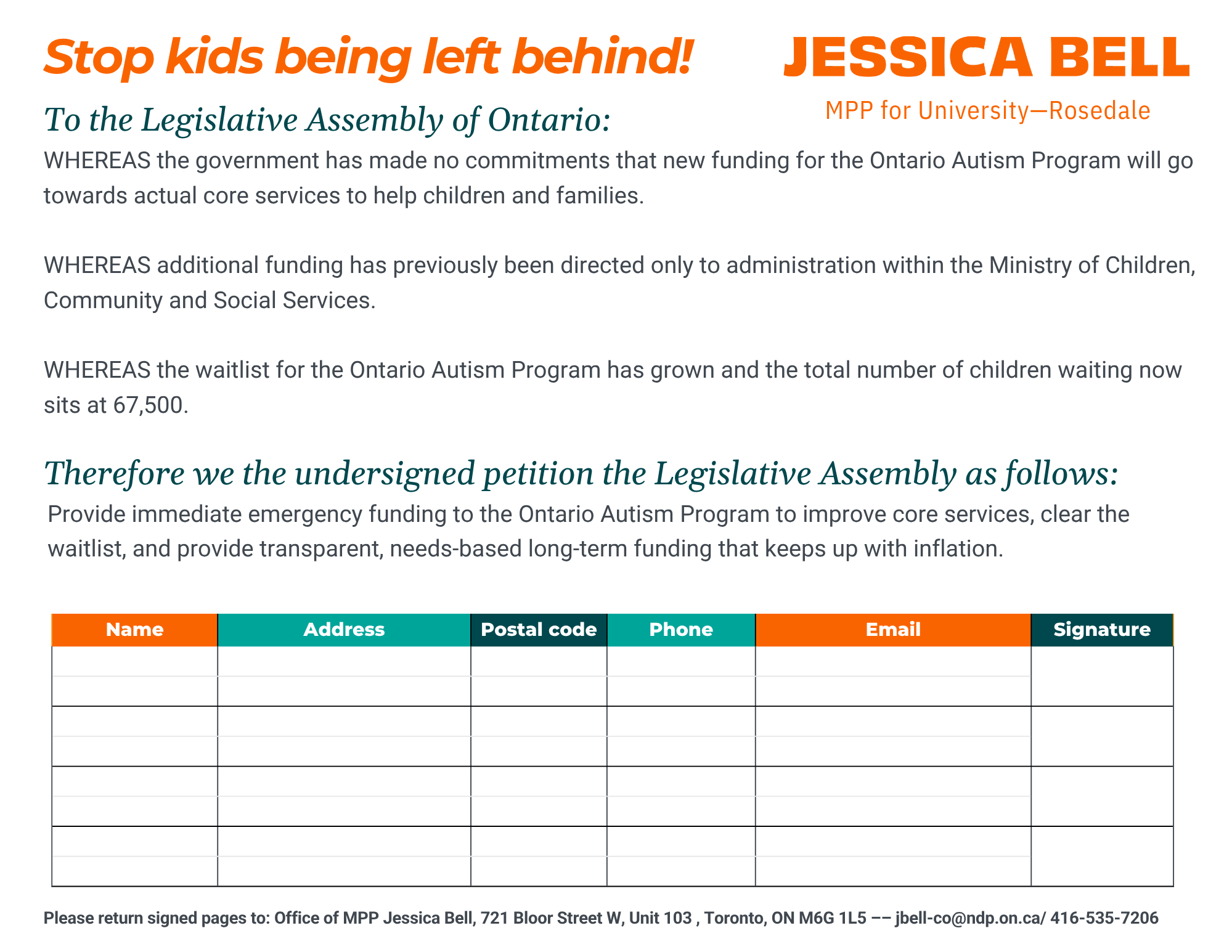
Firstly - the government has made no commitments that this new money will go towards actual core services for the Ontario Autism Program. As it stands, this funding will largely go towards administration within the Ministry of Children, Community and Social Services.
Parents, advocates, and the Ontario Autism Coalition have raised concerns that as a result, this money won’t directly help children or their families. That’s a big problem, because the scale of support needed for kids with autism is growing.
That brings us to the second issue - this new funding simply isn’t enough to meet demand. Since the Conservatives were elected in 2018, the waitlist for the Ontario Autism Program has grown and the total number of children waiting now sits at 67,500.
Families can often spend up to five years on the waitlist, before finally receiving funding and support. In the meantime, many are forced to pay out of pocket for expensive private services, costing up to $20,000 a year.
My colleague MPP Alexa Gilmour (Parkdale-High Park) - the Shadow Minister for the Ontario Autism Program - spoke out this week about the unfolding crisis, making clear that we need immediate emergency funding to improve core services, clear the waitlist, and provide transparent, needs-based funding that keeps up with inflation.
Sign the petition here or by clicking on the button below.
Conservatives refuse to do the right thing on OSAP
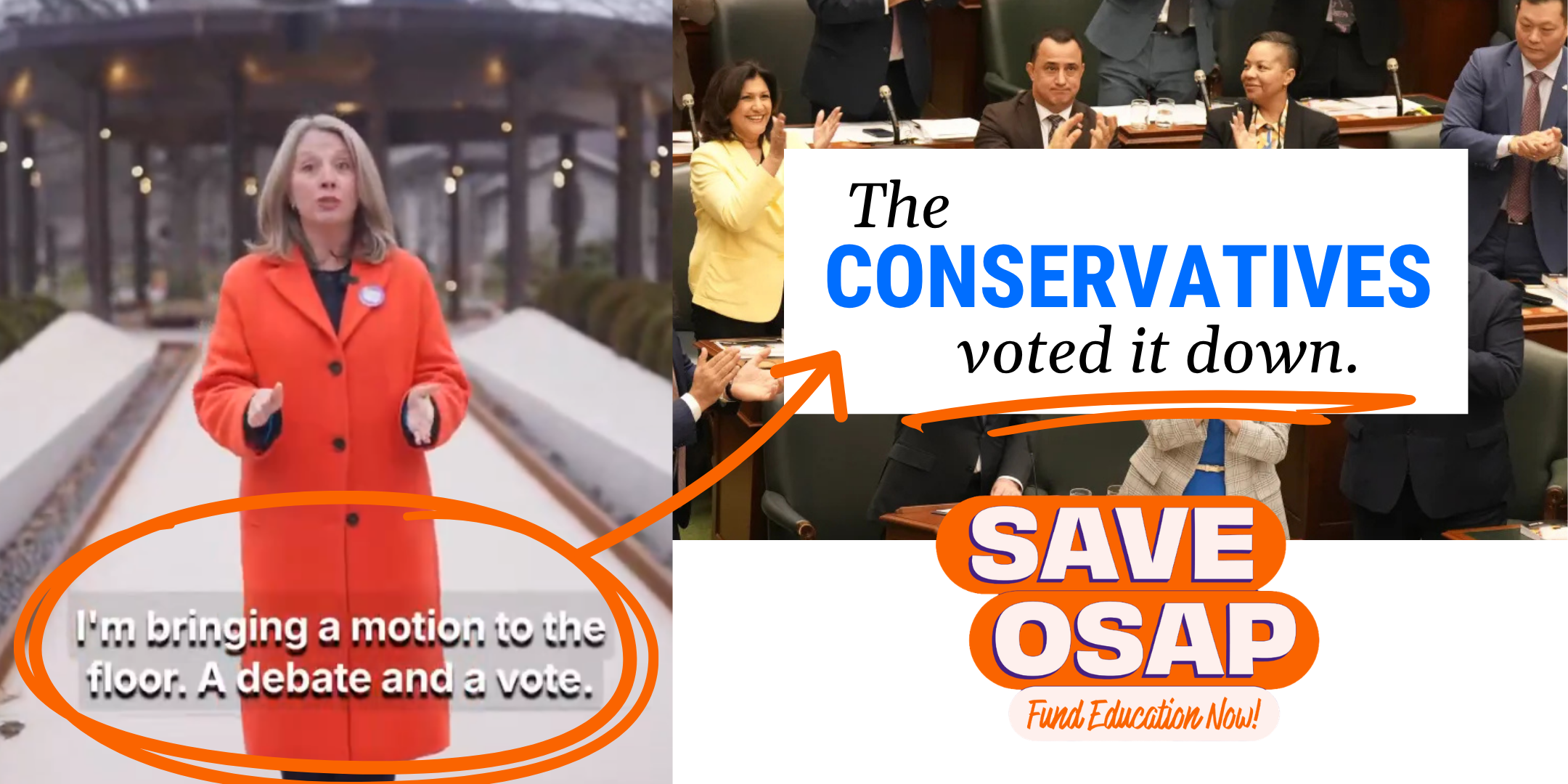
On Tuesday, our leader MPP Marit Stiles put forward a motion at Queen’s Park, calling on the Conservative government to reverse the damaging cuts they are making to OSAP, and for interest on existing and new OSAP loans be removed.
This was the Conservatives’ opportunity to decide if they think students and young people are worth investing in. They voted no, and voted down the motion.
Instead of supporting young people in our province, the Premier has mocked students by branding them as “basket weavers”, and his government has talked the big talk about prioritizing trades-based and engineering courses over others, whilst at the same time bringing Ontario’s post-secondary education sector to its knees.
The very colleges that deliver this kind of training are currently being forced to cut staff, programs and student supports across the board - including at George Brown’s Casa Loma campus just north of our riding.
Myself and my Official Opposition colleagues are ready to enable young people to build their careers and lives here in Ontario. That means reversing cuts to OSAP, and setting students on a path to a better, more stable future.
You can visit SaveOSAP.ca to learn more, and get involved.
If you’re a student, parent, or educator and you've been impacted by recent changes to OSAP, I’d like to hear from you. You can reach out to my office at [email protected].
Stephen Lewis: 1937-2026

Stephen Lewis was a giant of political life in Ontario, and Canada, and I was saddened to hear of his passing earlier this week.
As our province’s first Ontario NDP Official Opposition leader, we have his work to thank for rent controls in Ontario – as we continue to stand up for these protections today.
Stephen showed us what it meant to fight with everything you have for what you believe in. That’s not always easy.
His relentless passion and drive fueled his work as Canada's Ambassador to the United Nations, and the conviction and clarity he contributed to our country’s voice on the world stage is much missed.
As uncertainty and conflict continue to dominate news headlines, I think of what Stephen’s approach would be to the big issues our global community is facing: to do the right thing. Especially when it’s less convenient and requires us to take a stand.
Stephen demonstrated this in his role as a UN Special Envoy for HIV/ AIDS throughout Africa, bringing leaders from around the world to the table to take action on this crisis, when fear and stigma of the epidemic were even larger roadblocks to helping people in need.
His enduring work on HIV / AIDS can be seen today, as the foundation he set up continues to transform lives.
My thoughts are with the entire Lewis family at this time, and Stephen’s legacy will live on through every person’s life he changed for the better.
Parent Involvement Advisory Committee (PIAC) Ward Elections
Parents, and caregivers are invited to participate in the 2026-27 PIAC Ward Co-Representative Elections, an opportunity to have a direct voice in shaping parent engagement and supporting student success across the system. The nomination and voter registration period closes Monday, April 6th at 11:59PM. To learn more and register, click here or on the button below.