
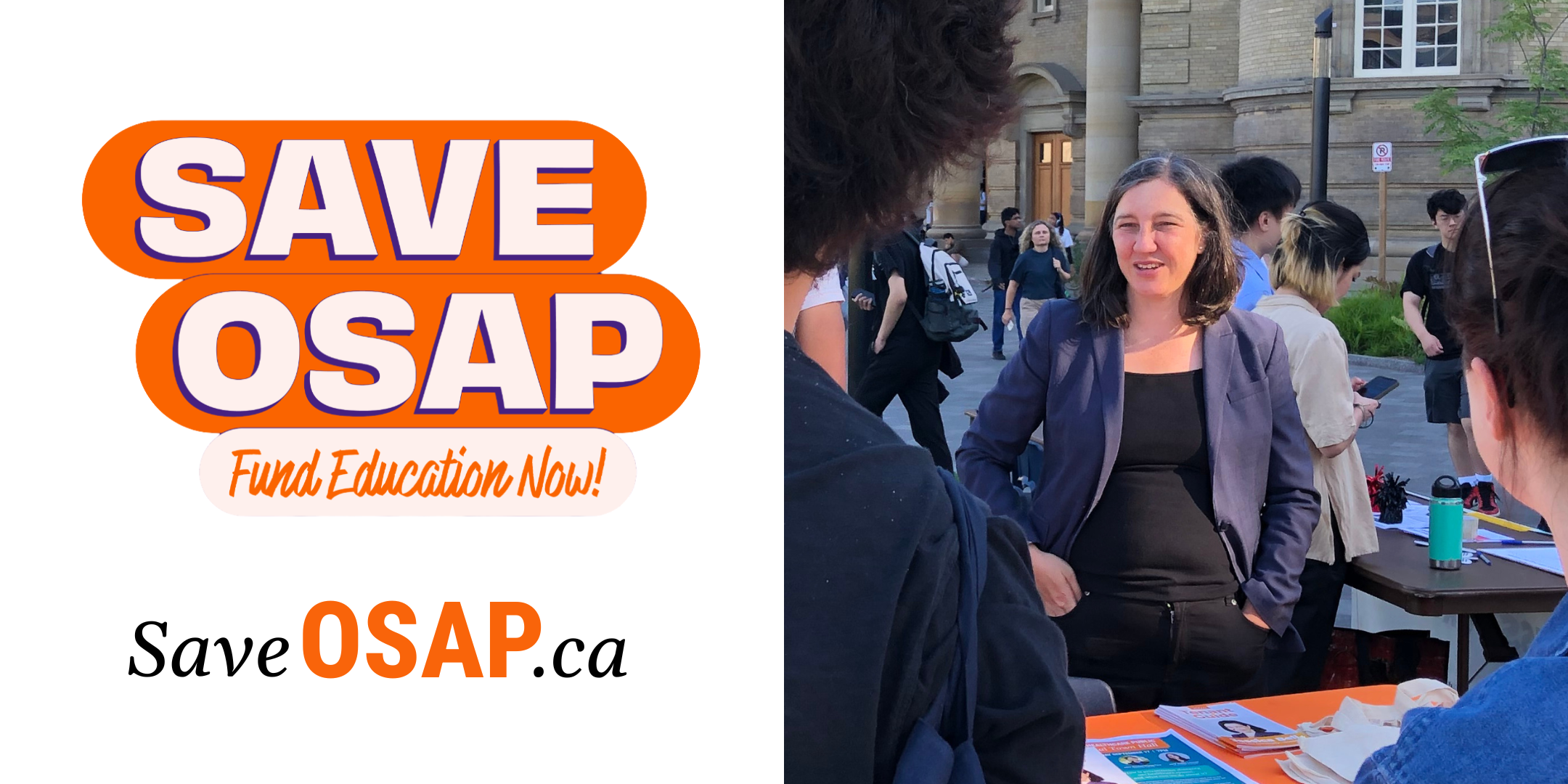
Dear neighbour,
In the name of “saving” Ontario’s financially strapped colleges and universities, the Conservative government has decided students should foot more of their tuition bill.
Come September, the maximum share of grant funding available through the Ontario Student Assistance Program (OSAP) will drop from 85% to 25%. The tuition freeze has also been lifted, allowing colleges and universities to increase tuition by up to two per cent per year.
That means bigger loans and more debt.
Post-secondary education is already expensive.
Students broke down the cost of going to school at a recent student roundtable and press conference we hosted at Queen’s Park. Raymond Bhushan, an engineering student at the University of Toronto, said he spent about $17,000 a year in tuition as an undergraduate, $13,000 a year for a room in a shared house, and $10,000 a year for food and basic expenses. That’s roughly $40,000 per year — or about $120,000 in costs over a four-year degree. There’s no way a summer job at Tim Hortons is going to cover these kinds of expenses.
These fee hikes will impact who goes to college or university, and who doesn’t.
Students with help from the bank of mom and dad will manage. Everyone else will face an impossible choice: don’t go — and limit your earning potential for life. Or go — and carry crushing debt well into your 30s.
When defending the cuts to OSAP grants, Ford, at a recent press conference, suggested students were choosing programs with no practical value.
“You’re picking basket-weaving courses,” he said. “There’s not too many baskets being sold out there.”
The truth? Most of the students I meet want practical and meaningful careers — engineering, nursing, IT, carpentry, education, social work, public policy. They understand how tough the job market is and how expensive Ontario has become.
Along with his tuition-hike announcement, the Premier also committed to increase government funding to colleges and universities. He described his announcement as “historic” and “generational”, but the funding crisis he’s attempting to fix was largely of his government’s own making.
Ontario provides the lowest per-student funding in Canada — by far — while students here already pay the highest tuition.
The anger students are feeling is not just about tuition and debt. It’s about making it even harder for a generation that already feels like they’re being ignored.
One in four young people are looking for work. Wages are stagnant. Rent and groceries are sky-high. Owning a home or raising a family feels increasingly out of reach.
Students might be asking why the Conservatives didn’t pay for the post-secondary funding shortfall by moving over money from the scandal-ridden Skills Development Fund – which gives money to companies for training.
We’ve seen what happens when governments push too far.
In 2012, Quebec students organized against the proposed tuition hike from $2,168 to $3,793 under Premier Jean Charest. The tuition strike grew into one the largest student protest movements in Canadian history, and culminated in the election of a new government, which halted the tuition increases.
Students are often dismissed as politically disengaged. History says otherwise.
If this government thinks students will quietly accept a future of deeper debt and diminished opportunity, they may be in for a surprise. This isn’t just a budget line item. It’s a generational turning point.
Join the Ontario NDP's campaign to push back on Ford's OSAP cuts by clicking the take action button below.
Join us at our Save OSAP Town Hall on March 12. More info and RSVP details .
Sincerely,

Jessica Bell
MPP, University-Rosedale
In this newsletter:
- Close the loopholes on mid-term rentals
- Resident Association roundtable: recap
- Freedom to practice your faith without threat
- Celebrating Lunar New Year
- Join me at the Coldest Night of the year
- Now on Substack!
- The Second Mile tax clinic is back!
Close the loopholes on mid-term rentals

Tenants at 7 Jackes Avenue came to me a few months ago with a serious concern. Long-term rental units in their building are being converted into mid-term rentals and listed for stays of 28 days or more at astronomically high monthly prices. Here is why it matters.
In Toronto, rentals of fewer than 28 consecutive days are regulated as short-term rentals. That means the home must be the host’s primary residence, it must be registered with the City, and it is subject to municipal oversight and enforcement. But once a unit is listed for 28 days or longer, it no longer falls under those short-term rental rules and lands in a regulatory grey area.
That gap allows homes to be removed from the long-term rental market and repackaged as high priced“mid-term” rentals. The result is fewer long-term rental homes on the market, higher rents, and occupants who do not have full protections under the Residential Tenancies Act.
This is not an isolated case. Across Toronto and the GTA, long-term rental units are increasingly being shifted into short- and mid-term rental arrangements. Inside Airbnb data shows that approximately 14,800 Toronto properties are being advertised for stays of 28 days or more, about 69 per cent of all listings. Many of these occupants are not tourists, but workers and students looking for stable housing.
I wrote to the Minister of Housing Rob Flack demanding that the province close these loopholes and return these mid-term rentals to the long-term rental housing market. I am also calling for a provincial short-term rental registry that restricts short- and mid-term rentals to a person’s primary residence in cities with low vacancy rates, and proper enforcement of our rental protection rules.
Working with the Summerhill Tenants Association, we gathered more than 200 signatures from tenants in the building calling for action.
You can add your name here.
Resident association roundtable: recap
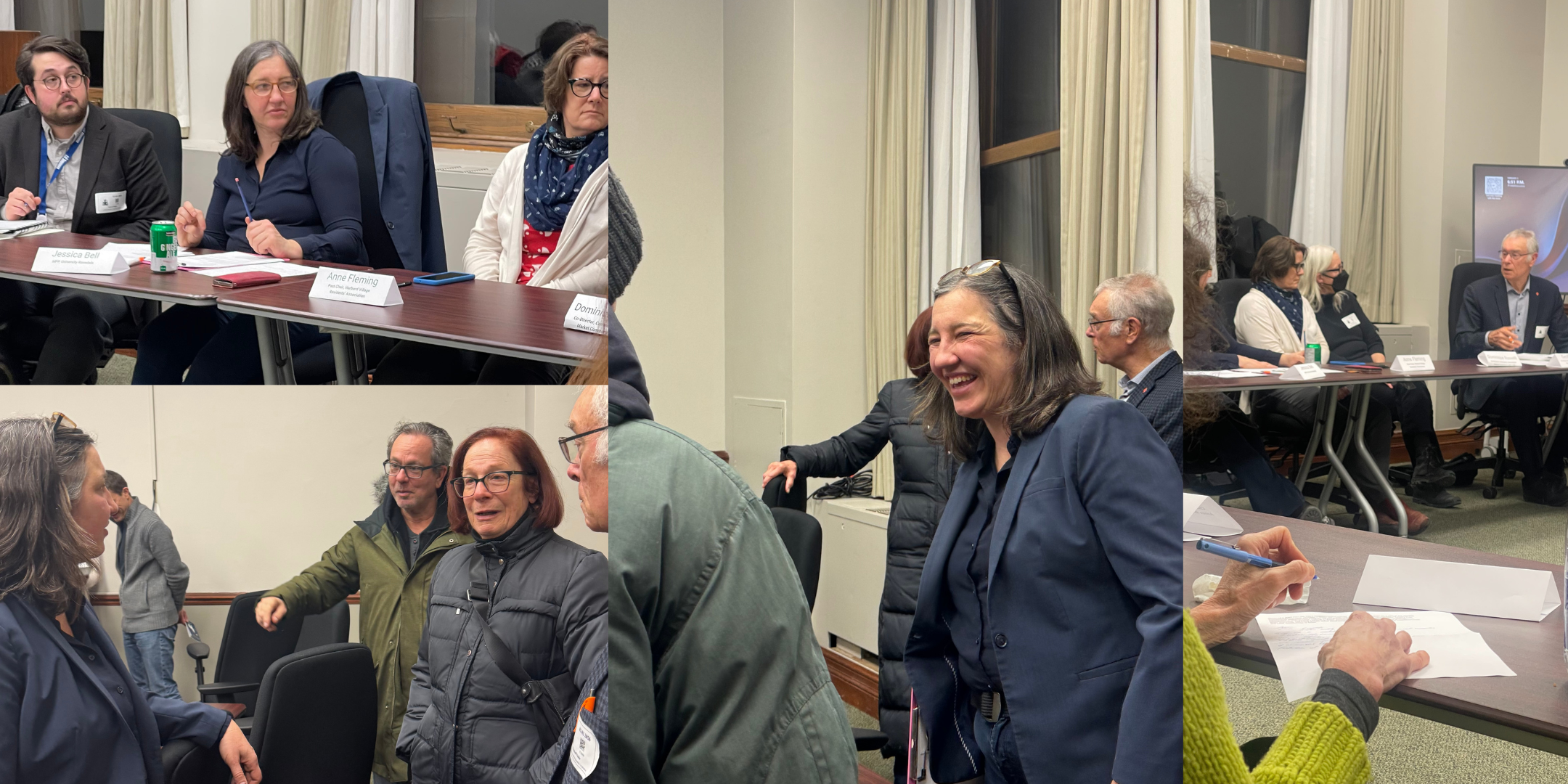
As the MPP for University-Rosedale, it was a pleasure to host a roundtable discussion on February 2nd with board members and active members of our area’s many residents’ associations to discuss the issues that matter most to our community.
I was joined by Spencer Julien from Mayor Olivia Chow’s office, along with representatives from associations across the Annex, Rosedale, Yorkville, Kensington Market, Seaton Village, Palmerston, Harbord Village, Ossington, Governor’s Bridge, and other communities in our riding.
The conversation focused on what it will take to keep our neighbourhoods safe, green, and affordable.
Residents raised serious concerns about housing affordability and development pressures, including provincial cuts to affordable housing funding, the weakening of Inclusionary Zoning policies, and the expansion of Protected Major Transit Station Areas without clear affordable housing requirements. There was also concern about the loss of existing rental housing through illegal eviction activity and rental homes being torn down and rebuilt as condos.
Community safety was another key issue. Residents spoke about vehicle theft, property damage, as well as the need for better road safety measures, including stronger traffic enforcement, speed cameras, and clearer regulations for e-bikes.
Residents emphasized the need for restored TTC funding, improved TTC service, and improved accessibility at stations. Environmental sustainability was also front and centre, with calls for stronger tree protections, more permeable surfaces, expanded heat pump programs, and higher green building standards.
Finally, many participants highlighted the need to scale up supportive housing and mental health investments as a practical and cost-effective response to homelessness and public safety concerns.
We will continue working closely with residents to advance practical solutions and ensure that University–Rosedale remains a safe, sustainable, and affordable place to live.
Freedom to practice your faith without threat
I was horrified to hear that the Toronto Islamic Centre on Yonge St recently received violent Islamophobic phone calls. These calls were deeply disturbing and directly threatened the mosque and its staff. This is not the first time this has happened to this mosque.
We stand in solidarity with the mosque’s leadership, staff, and members. Islamophobia is real, dangerous, and it is on the rise. As an elected official it is my job to work with communities to ensure everyone feels safe in their place of worship.
If you witness or experience a hate-motivated incident, you can report it to the police. Call 911 in an emergency or 416-808-2222 for non-emergencies. The Toronto Police Service has a dedicated Hate Crime Unit that investigates incidents motivated by religion, race, sexual orientation, gender identity, or other protected grounds. You can also report incidents to community organizations such as the National Council of Canadian Muslims (NCCM), which tracks Islamophobic incidents and supports affected families.
Faith institutions concerned about safety can apply to the province’s Ontario Anti-Hate Security and Prevention Grant, which helps cover the cost of security equipment, training, and safety planning. The province has not yet announced the next application period. We will share an update as soon as new information becomes available.
The City of Toronto offers one-time financial assistance to support communities impacted by traumatic incidents and community violence with their Community Crisis Response Fund. I encourage all eligible institutions to explore these programs and prepare for the next intake round of funding.
If you would like to support the Toronto Islamic Centre directly, you can visit their website here.
Celebrating Lunar New Year
Happy Lunar New Year, Gong Hei Fat Choi 恭喜發財!
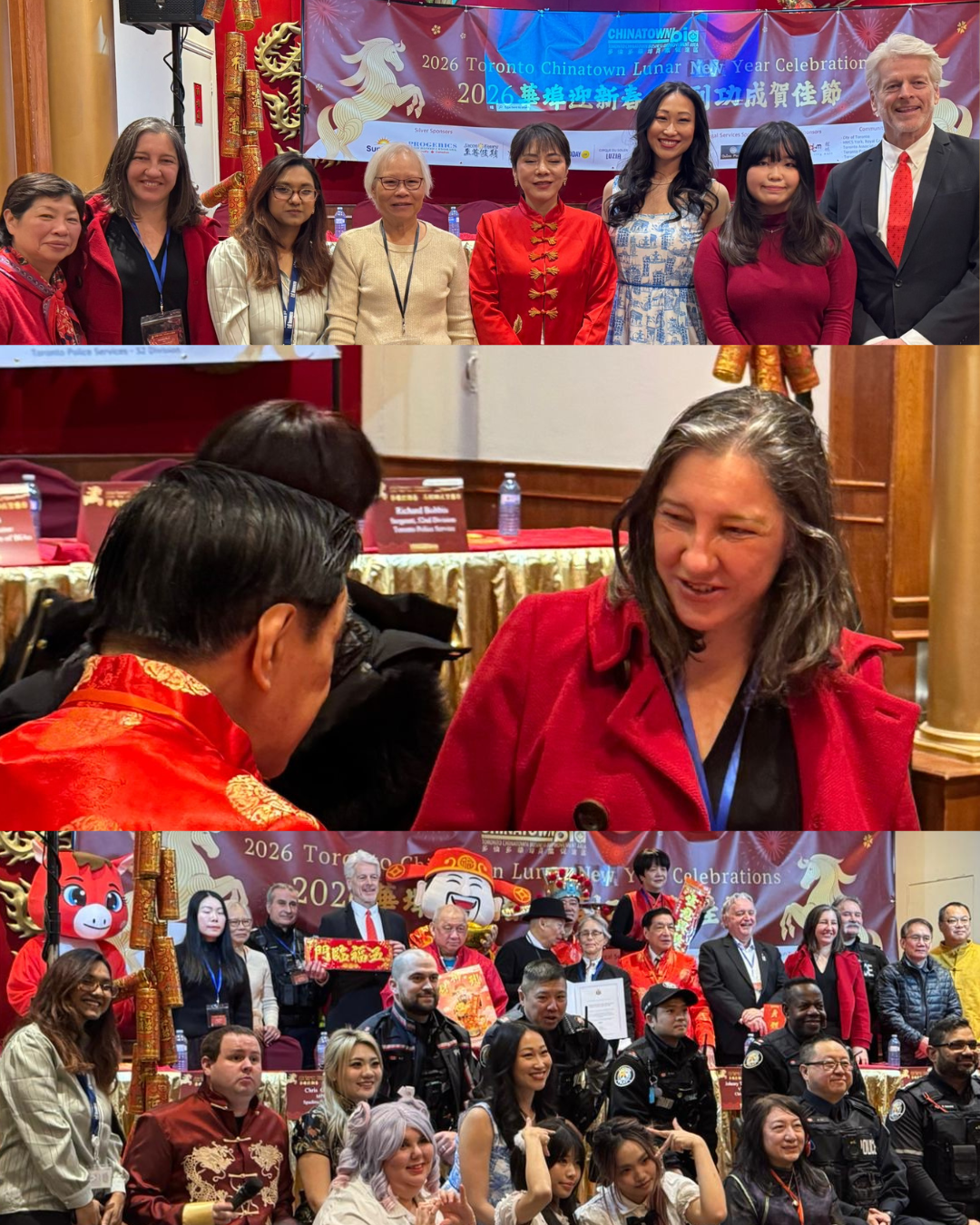
It was fantastic to join the Toronto Chinatown BIA, the Toronto and Community Cultural Centre, and members of the Chinese-Canadian community throughout Chinatown to celebrate the start of the Year of the Horse.
As your MPP, I’m proud to represent one of the oldest and largest Chinatowns in North America.
It's also my pleasure to uphold Toronto and Ontario as one of the most prosperous, fair, diverse and welcoming regions in the world.
I encourage everyone to come down to Chinatown and celebrate the new year, shop locally, and enjoy the good food.
To learn more about upcoming programming and community initiatives, you can visit the websites of the Toronto Chinatown BIA and the Toronto Community & Cultural Centre. We will also continue sharing community events and celebrations as they are announced.
Coldest Night of the Year 2026
Located on College and Borden Street, the Fort York Food Bank has become one of the busiest food banks in Ontario.
In a typical week, the food bank provides a three-day supply of groceries and offers hot meals, as well as information and support services to help people access housing, employment, healthcare, and other community resources.
People accessing the food bank include students, people on social assistance, seniors, newcomers, and workers who cannot afford to pay for food in a province as prohibitively expensive as ours.
Every year food banks organize a walk on the coldest night of the year to encourage us to walk and donate for a very good cause. I invite you to join me.
When: Saturday February 28 at 4.30PM
Where: Fort York Food Bank, 380 College St (Start point)
You can find out more here.
Now on Substack!
If you’re searching for an inside look at what’s happening with your money at Queen's Park, where it's spent and why it matters to your daily life and our future as a province, my brand new Substack is for you.
Here, I’ll be providing tailored updates in the run-up to Ontario 2026’s budget to give you a clear, progressive window into what monetary decisions are being made, and when.
I’ll break down what’s debated in the chamber, what’s buried in budget bills, and how the choices made this Spring will affect workers, renters, students, families, and seniors across our province.
You can sign up to my Substack here - and get updates straight to your app or inbox.
The Second Mile tax clinic is back!
The Second Mile Club is hosting a tax clinic in partnership with the CRA, for seniors aged 55+ or for people 18+ living with a disability who need help filing their income tax and benefits.
Please note, there’s only one session per person, done by phone, with limited in-person appointments. This service is completely free, and available to single individuals who make $35,000 or less, or couples who make $45, 000 or less.
Open for appointments as of March 2nd. To learn more or book an appointment, reach out to [email protected].