Dear neighbour,
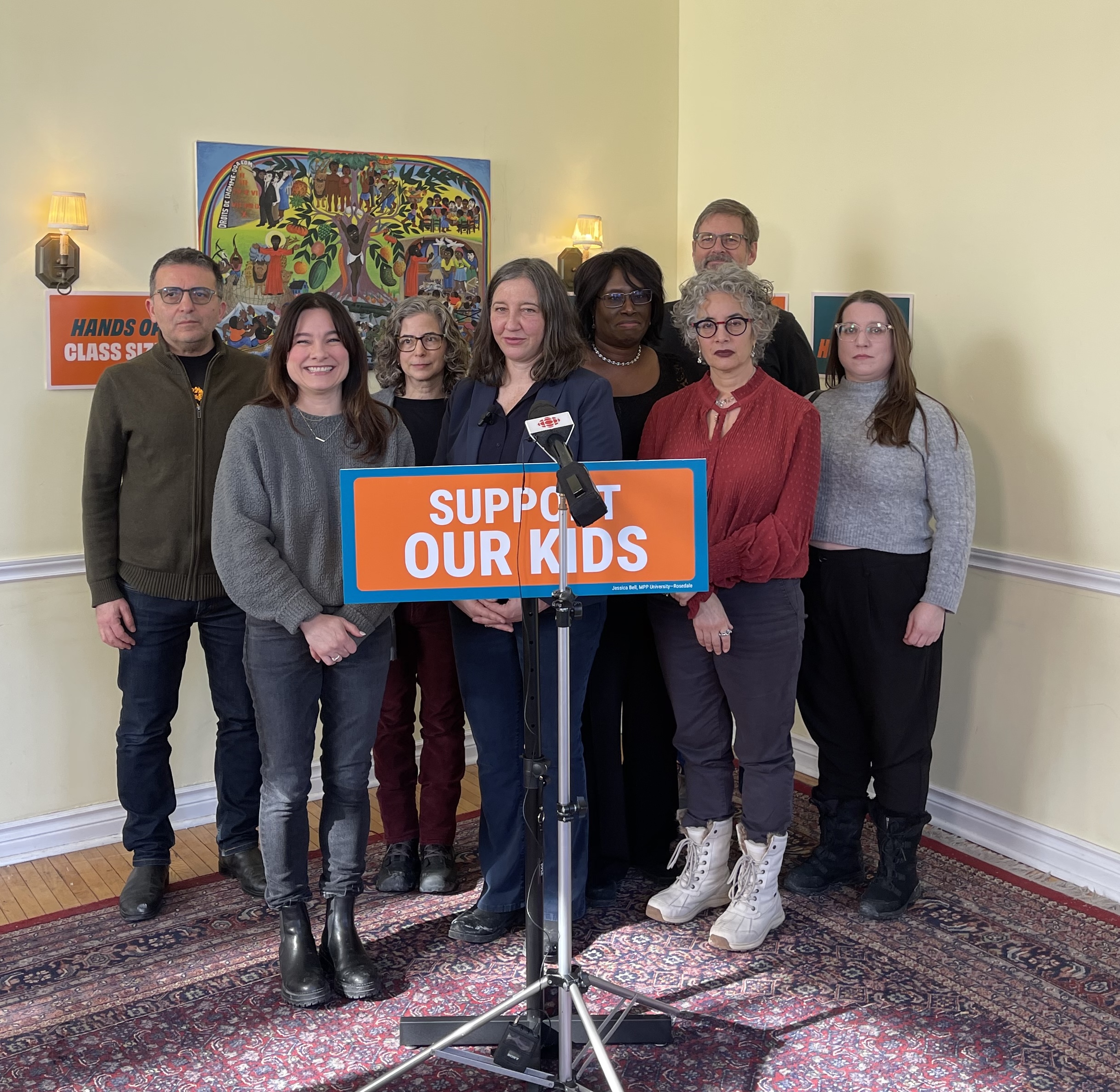
On Monday, February 2, I hosted a press conference with parents and teachers to raise concerns about the removal of the Toronto District School Board’s class size cap for Grades 4 to 8.
I was joined by parents, Tonia, Rebecca, and Lindsay, Dee Williams our School Board Trustee, Helen Victoros the president of the Elementary Teachers of Toronto, and Chris Chandler and Hayssam Hulays from the Ontario Secondary School Teachers Federation.
For parents out there – this means ultra-large classes could be coming to your child’s elementary school this September, unless we get this Conservative government to back down.
Every parent I know is angry and frustrated. We want the best for our kid, for every kid.
We all know what happens when class sizes balloon—student learning suffers. In overcrowded classrooms, children get less attention from their teacher. Bullying, violence, and disruptive behaviour increase. Learning in math, reading, and writing goes down.
This latest move to lift class-size caps is not a one off—it’s part of a very troubling pattern. Since the Conservatives came to power, they’ve cut $6.3 billion from public education. And it’s our kids who are paying the price.
The latest EQAO results show stagnant learning outcomes. The majority of grade 6 students are not meeting grade-level expectations in math. Violence and disruptive behaviour are commonplace. There is no learning happening in a classroom where kids are fighting in the back row.
I talked to teachers at our nearby schools to get a snapshot of what is happening in a typical elementary school.
Teachers told me they’re teaching 33 students in a single classroom — sometimes with not enough desks, not enough chairs.
Schools have lost teachers, vice-principals, and educational assistants.
At King Edward, there is just one educational assistant for the entire school.
Students with special needs are being sent home — not because they don’t belong, but because there is no staff to support them.
Teachers are buying their own printing paper. Textbooks are so outdated they can’t be used.
This is not what public education should look like in Ontario today.
Our schools should be places where our kids get to reach their full potential, not cattle holding pens where kids sit bored, restless, and frustrated.
Public schools should have smaller class sizes and more permanent teachers and education workers in the classroom. That will require an investment in our schools, not more cuts.
If you are concerned about the removal of class size caps and what it means for students, I encourage you to make your voice heard. Contact Minister of Education Paul Calandra directly by clicking on the action alert button below.
Sincerely,

Jessica Bell
MPP, University-Rosedale
In this newsletter:
- You’re invited to our Renter Forum on February 12
- What are these new TDSB School Board Family Support Offices?
- Pre-budget consultation report back: Did you know 20% of Grade 10 teenagers are vaping?
- FAO report on capital spending reveals deep cuts to affordable housing and school repairs
- How serious is the government’s new Buy Ontario, Buy Canada policies
- Ontario doubles down on nuclear as costs rise and renewables expand globally
You’re invited to our Renter Forum on February 12

Are you a renter living in the Kensington Market-Chinatown area and looking to build community and push for stronger renter protections?
Join me alongside renters and community groups from across the neighbourhood on February 12 for our Renter Forum, as we come together to share ideas and discuss the issues that renters are facing today in our city.
You'll learn how to better protect your home, deal with your landlord, set up or strengthen a tenant association, and work with me and our team to pass stronger provincial housing laws .
Snacks and light refreshments will be provided. I look forward to seeing you there.
When: Thursday, February 12 at 6PM
Where: St. Stephen-In-The-Fields Church
What are these new school Family Support Offices?
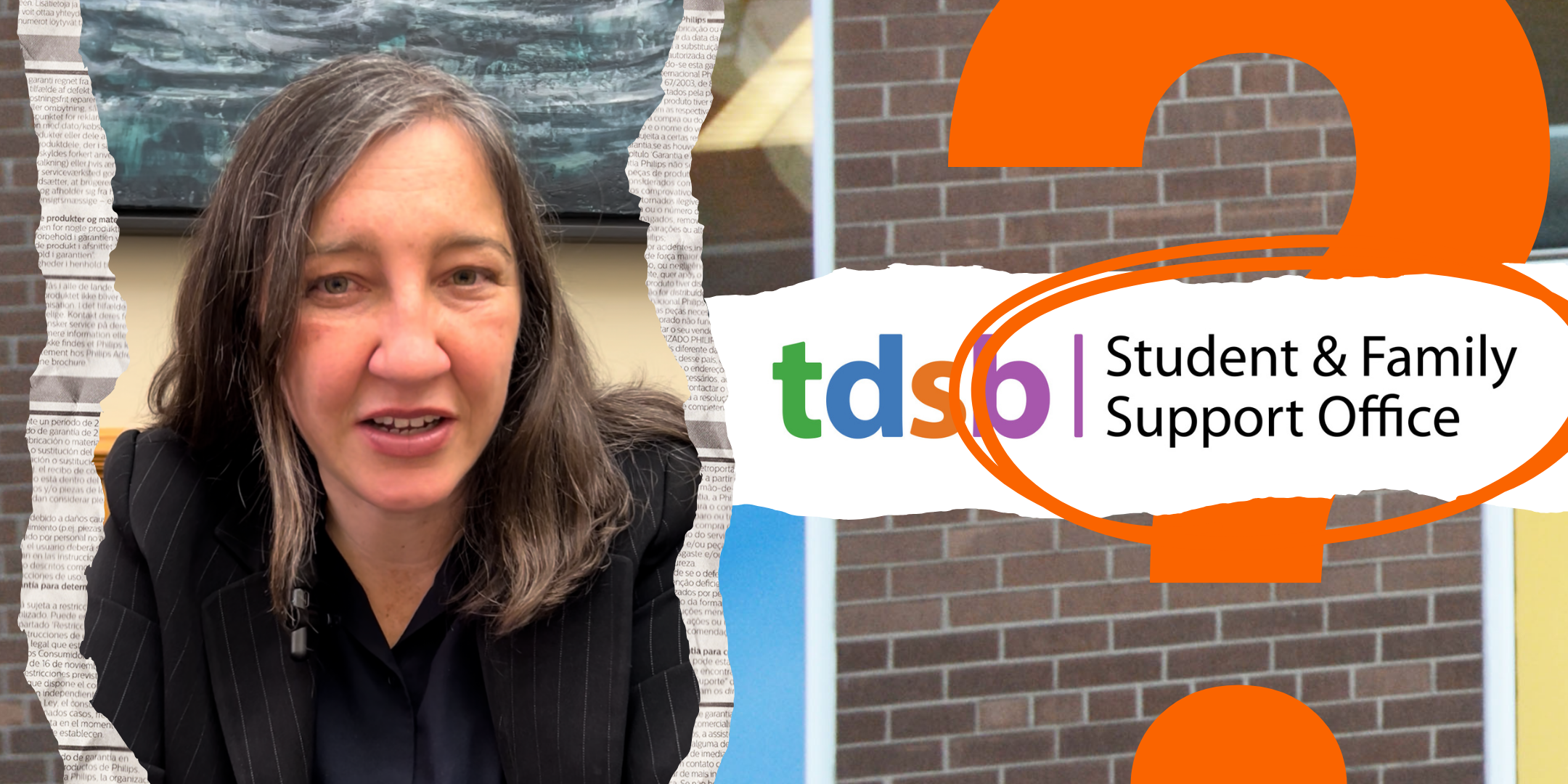
In January, the Toronto District School Board (TDSB) and Toronto Catholic District School Board (TCDSB) opened new Student and Family Support Offices.
The province required these offices to be created after it placed these school boards under provincial supervision and fired democratically elected school board trustees.
The offices give parents a single point of contact when concerns can’t be resolved with a teacher or principal, with a commitment to acknowledge requests within 48 hours and aim to respond within five business days.
It remains to be seen whether these offices are going to be effective at helping parents on a case by case basis. I hope so. What we know for sure is that these offices will not provide the democratic oversight and strategic direction that trustees provided to these school boards.
The TDSB office can be reached by email or phone at [email protected] or 416-397-3100. The TCDSB requires parents to submit an online form, with phone and email support available if needed at [email protected] or 416-397-6222
If you are having difficulty getting a response from the Family Support Office please reach out to our office at [email protected] or 416 535 7206.
Pre-budget consultation report back: Did you know 20% of Grade 10 teenagers are vaping?

I was alarmed when Hillary Buchan-Terrell from the Canadian Cancer Society told politicians at the pre-budget hearings in Niagara in January that 20% of Grade 10 teenagers vape.
I have been travelling the province listening to Ontarians tell us what they’d like to see in the upcoming provincial budget. I’ll be sharing stories about what I’m hearing in this newsletter.
I expected to hear about health care deficits, school budget cuts, growing homelessness during these pre-budget hearings - and I have - but I didn’t expect vaping to also be a hot-button issue.
Vaping first came up in Pembroke, Ontario, when Kory McDonald from Rothmans, Benson and Hedges came to committee.
McDonald called for Ontario to do more to crack down on illegal tobacco sales, but I was more interested in the company’s explicit “commitment to a smoke-free future.” Wouldn’t this new mission statement harm its profits? It turns out, no.
A quick google search taught me that some global tobacco companies have quietly evolved into the world’s largest vaping companies. Once tasked with the job of getting people hooked on cigarettes, now these companies’ profit from getting people hooked on vaping, including teenagers.
In Ontario, vapes are addictive, alluring and easy to get. Vapes come in flavors, like mango, berry, apple, vanilla custard and coffee. Shops sell vape products right near schools because there is no rule banning stores from being close to a school, as there is with cannabis stores. Undercover investigations reveal some stores are selling to minors. Vape products are bought online with no age verification and delivered to the door via Canada Post.
Vaping is bad for your health. It causes lung damage, impairs concentration, memory, and brain development in youth. It increases the likelihood of someone taking up smoking, even though it’s marketed as a smoking cessation product.
It’s too early to know the long-term effects of vaping, but we do know that vaping involves burning and inhaling products that are known to cause cancer, such as nickel, tin, lead, and formaldehyde. I don’t want these chemicals in my grade 8 daughter’s lungs.
I want Ontario to spend its money wisely and prevent public health tragedies from taking hold. As a parent, I want every child in Ontario to grow into a healthy and well-educated adult. That’s why getting tough on vaping is the right thing to do.
You can read more about this issue on my website and sign the petition to call for stronger rules to lower vaping rates among children and teenagers.
FAO report projects deeper cuts to affordable housing, school repairs

On Wednesday, January 28, the Financial Accountability Office (FAO) released a report projecting significant reductions in provincial capital spending for affordable housing and school repairs over the next 10 years.
The FAO report shows that planned funding for affordable housing capital is approximately $1.9 billion over the next 10 years, representing about a 60 per cent reduction compared to the previous decade.
At a time when more than 85,000 people are homeless and unemployment is rising, Ontario needs to invest ten times this amount to build enough affordable homes, end encampments, and kickstart our stagnant construction industry.
It is cheaper to do this upstream investment than it is to badly manage the chronic social downstream disease of homelessness, mental health and addiction. Food banks, shelters, jail, increased policing and security, and more emergency room visits all cost bucketloads of money and do very little to address the root cause problems.
There are smart and stupid ways for governments to respond to homelessness, and neither approach is cheap. Choose the approach that works.
Every parent has seen those big blue signs posted on the side of their kid’s school building, trumpeting the Conservative’s investment in school repairs. Those signs are all about making the government look good, not actually fixing the problem.
Here are the facts. The Conservatives are not allocating enough money to fix the schools we have and build the ones we need. In 2024, the FAO estimated it would cost $31.5 billion to bring all school buildings to a state of good repair and build new schools to meet student growth. This FAO report shows the Conservatives are allocating just $26.4 billion.
This means more Ontario children will learn in overcrowded classrooms. Children will see more pool closures, more portable classrooms, the lead will remain in school drinking water, there will be more broken pipes and flooding, more sweltering heat and freezing cold. We should be setting students up for learning success, not creating hardship.
We urgently require a clear economic plan that prioritizes investment in public schools, affordable housing, and health care. Investments that create and protect jobs and support a good quality of life for people across the province.
How serious is the government’s new Buy Ontario, Buy Canada policies
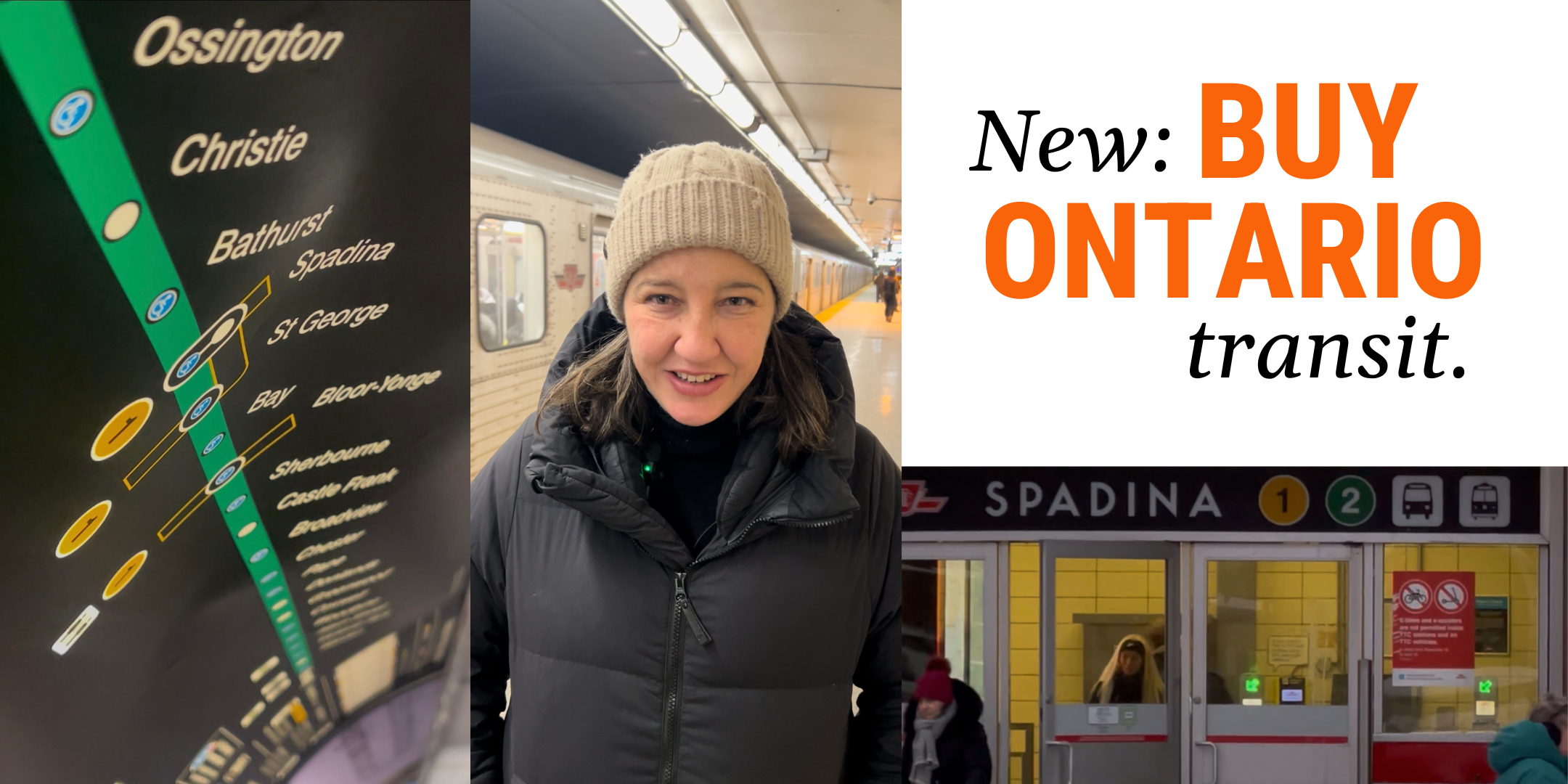
On January 15, both the federal and Ontario government announced increased funding for the purchase of 55 new subway trains for Toronto’s Line 2, raising their combined investment from $758 million to $950 million.
The new trains will be fully assembled in Canada and made with at least 55 per cent Canadian content, creating 900 direct jobs, and an estimated 1,700 jobs nationwide.
The investment is being advanced under the federal Buy Canadian policy and shows how public procurement can be used to support domestic manufacturing, protect jobs, and strengthen supply chains.
At the provincial level, Ontario is now consulting on new regulations under Bill 72, the Buy Ontario Act, which was introduced last fall following sustained pressure from the Ontario NDP to strengthen our procurement rules.
The proposed regulations would expand the Buy Ontario Act to include municipalities and local boards, and extend Buy Ontario requirements for major construction and infrastructure projects across the broader public sector, changes we specifically called for in our Buy Ontario First strategy. They also introduce new, tiered rules for light-duty fleet vehicles, prioritizing Ontario-made and Ontario-produced vehicles where feasible.
While these proposals represent progress, significant gaps remain. The regulations do not establish Ontario first requirements for most goods and services outside construction. They do not clearly require private companies delivering publicly funded services to source locally, and they do not allow governments to weigh local job creation, unionization, or social and environmental benefits alongside cost, as is done in Manitoba and Quebec. Large U.S. multinationals may still qualify as “Canadian” if they employ enough workers here.
Ontario spends approximately $30 billion each year on public procurement. The TTC subway car announcement shows what is possible when governments use that buying power strategically.
A strong, enforceable Buy Ontario framework will help ensure that public spending supports local businesses, protects and creates good jobs, and strengthens Ontario’s economy.
I encourage you to participate in this consultation. Public feedback on the proposed regulations is open until March 2. Submit your comments here.
Ontario doubles down on nuclear as costs rise and renewables expand globally

On January 12, the Ontario Clean Air Alliance reported that Ontario Power Generation applied to the Ontario Energy Board for a 72.6 per cent increase in the price it receives for nuclear power.
Despite this, the Ford government continues to prioritize nuclear expansion. A Toronto Star investigation reported that Ontario is committing more than $100 billion to nuclear projects, even as global energy trends move towards renewables which are significantly cheaper to build and operate.
Renewable energy offers Ontario an opportunity to reduce electricity costs while creating well-paying, unionized jobs across the province. Wind and solar projects can be built more quickly, scaled more easily, and delivered at lower cost to ratepayers than new nuclear facilities.
At a time when many Ontarians are struggling with rising living costs, decisions about energy infrastructure matter. Electricity policy should be guided by affordability, reliability, and evidence. Prioritizing investments that lower bills, create jobs, and support a cleaner energy future.