
Dear neighbour,
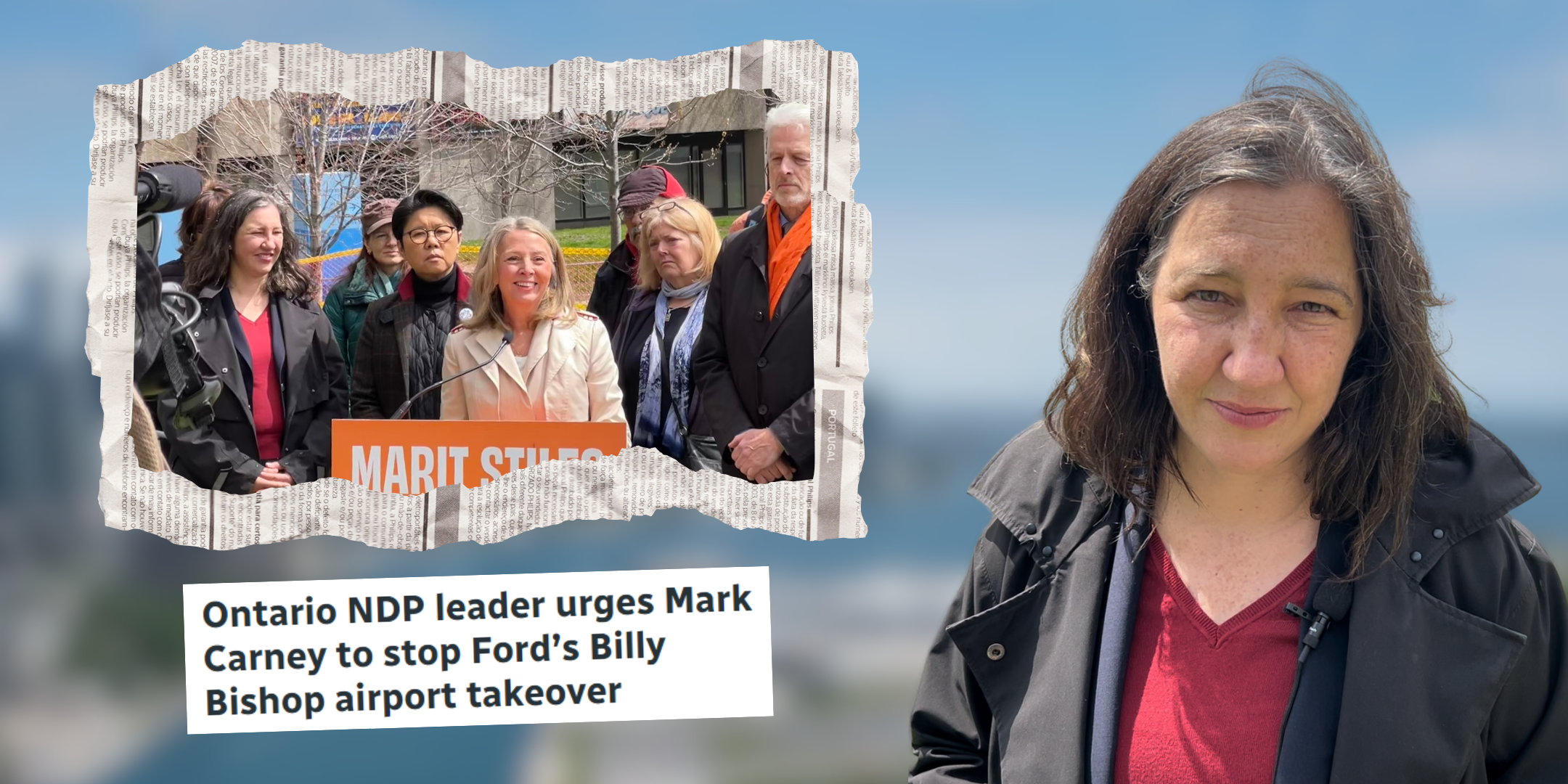
This week, we debated the Conservative’s Bill 110, the Building Billy Bishop Airport Act, 2026.
This bill would allow the province to take control of City-owned land connected to Billy Bishop Airport.
These lands include Little Norway Park and large parts of Toronto Island, including Hanlan’s Point, Centreville, the non-residential parts of Ward’s Island, Toronto Island Marina, the Gibraltar Point Centre for the Arts and the Island School.
The bill would remove the City of Toronto from the Tripartite Agreement that currently governs Billy Bishop Airport and replace the City with the province, all with the goal of allowing the province to spend untold amounts of money to expand the airport.
Expanding Billy Bishop to accommodate jets would not be a minor tweak — it would be a massive industrial expansion on Toronto’s waterfront.
What we know so far is alarming. The runway could need to be extended by roughly 900 metres, with approach lighting stretching far out into the lake and large jet blast barriers installed near the waterfront.
Passenger traffic could increase from about 2 million people a year to as many as 10 million — potentially meaning a plane every two minutes over downtown Toronto.
That means more congestion on already overcrowded streets like Bathurst, more pollution, and constant noise for surrounding neighbourhoods.
There are also serious health concerns. A Bathurst Quay neighbourhood air quality study led by University of Toronto researchers found that airport activity was a major source of ultrafine particle pollution linked to asthma, lung disease, heart attacks, cognitive decline, and other major health impacts.
This all leads to a fundamental question. Who is the waterfront for?
Over 20 years ago, the city, province, and federal government made a choice to prioritize people over industry. Billions of dollars have been invested to transform the waterfront into a place where people can live, work, and enjoy public space.
Encouraging people to spend their life savings on downtown homes, only to strip away the green space, parks, and waterfront access that made these homes attractive in the first place feels like a profound betrayal.
Toronto’s waterfront belongs to the people who live here, work here, and visit — not to private jets and airport expansions.
I think we’re going to win this campaign. I really do.
Here are four things you can do to help us build the momentum to protect our waterfront.
-
Connect with #NoJetsTO.
- Sign the petition to stop the Billy Bishop airport expansion here.
- Contact your local Liberal MP and ask them to quash this airport expansion. The federal government has the authority to stop this expansion.
- Bill 110 has been referred to committee. You can send written submissions or register to speak to the bill. Sign up here. When applying, select Bill 110.
Deadlines
- Deadline to request to appear at hearings: Tuesday, May 12th, 2026 at 12:00 PM
- Deadline for written submissions: Tuesday, May 19, 2026 at 6:00 p.m.
Sincerely,
Jessica Bell
MPP, University-Rosedale
In this newsletter:
- NDP pushes for a two-year rent freeze
- Does the HST rebate actually make housing affordable?
- The Conservatives push through their latest education bill
- Fighting $900 million in cuts: Education Townhall (Recap)
- Healthy Air at Home webinar
-
NDP pushes for a two-year rent freeze
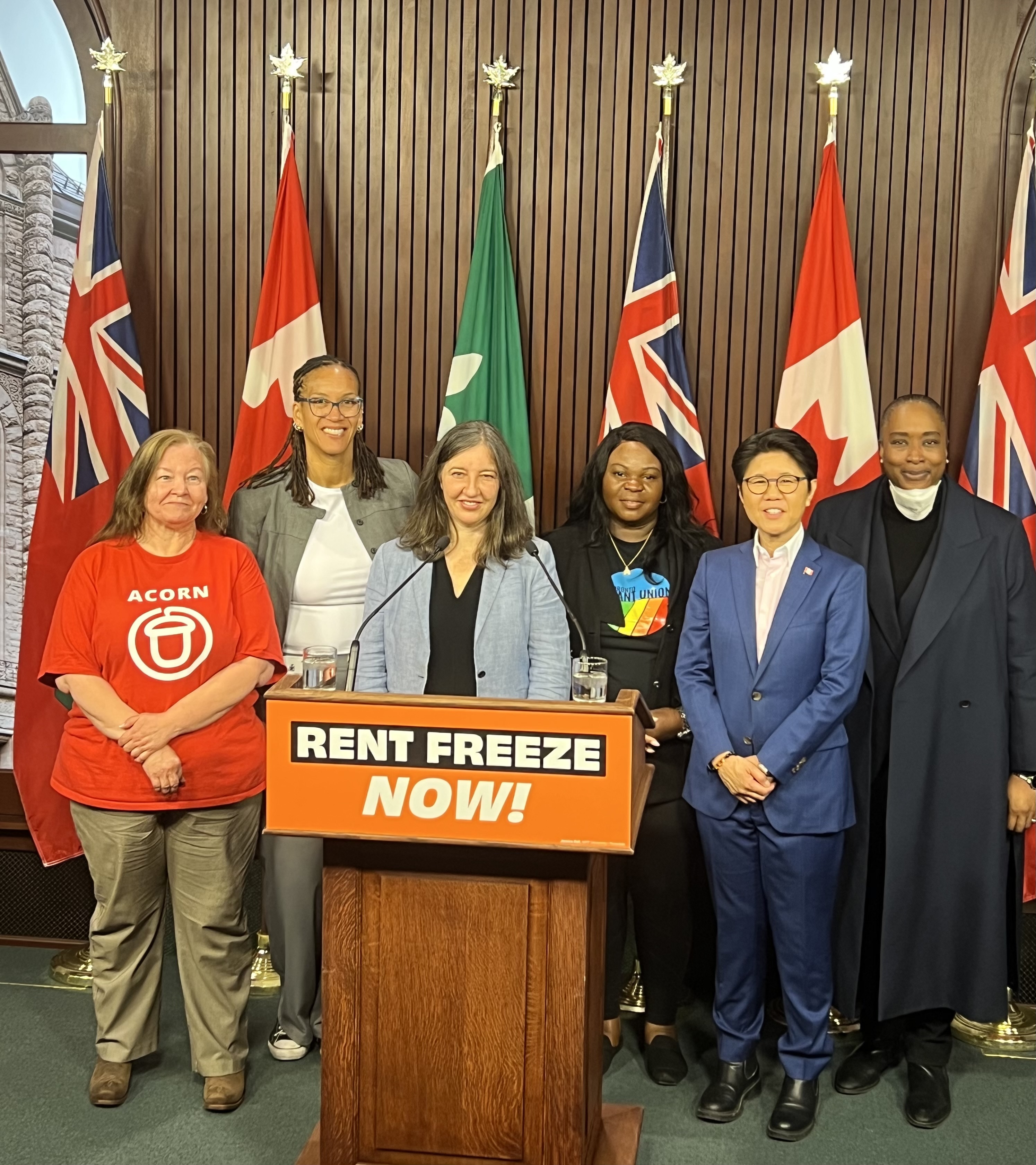
On Wednesday, May 6, I held a press conference and debated my motion calling for a two-year rent freeze on rent-controlled homes in Ontario for 2027 and 2028.
Ontario is facing tough times. There are more people looking for work now than at any point in the last 14 years outside of the pandemic, and youth unemployment remains very high — all at a time when life has never been more expensive.
For the 1.7 million renter households, the end of the month is stressful because that is when rent is due.
This motion would provide immediate relief by freezing rent increases on rent-controlled homes for two years. That would save the average renter roughly $600 a year, or about $1,200 over the course of the freeze.
The province already regulates rent increases for rent-controlled units through the annual guideline under the Residential Tenancies Act. That means a freeze can be implemented quickly by setting the guideline to zero.
The government sets the guideline rent increase every year, usually in June. Ontario already froze rent increases in 2021 during the pandemic. It can be done again.
Over the past decade, average rents in Ontario have risen by more than 50%, far faster than inflation. At the same time, the Conservative government eliminated rent control on homes built after 2018, failed to meet housing targets, and cut funding for affordable housing programming.
We surveyed renters across Ontario about how rising rents are affecting their lives. What we heard was alarming.
Renters told us they are cutting back on groceries and skipping meals to afford rent. Others said they are delaying medical, dental, or mental health care. Many said they have stopped saving for emergencies or retirement.
Some described living in homes that are too rundown, overcrowded, or unsafe because they cannot afford to move. Others said they are living with constant fear of being priced out of their communities.
A rent freeze is just one part of the Ontario NDP’s affordability plan because when housing is more affordable, life is more affordable.
The Ontario NDP’s housing plan includes bringing in strong rent control on all homes, including homes built after 2018, strengthening rental protection laws, banning Above Guideline Increases, and building 30,000 affordable homes a year as part of our public builder Homes Ontario plan.
Sign the petition to support a rent freeze here.
Want a rent freeze sign for your window or balcony? Pick one up at our community office at 721 Bloor Street West, near Bloor and Christie, Monday to Friday from 9 am to 4:30 pm.
-
Who really benefits from the government’s HST rebate?
On Thursday, May 7, I debated Bill 114, the HST Relief Implementation Act (Residential Property Rebates), 2026.
This bill would implement Ontario’s portion of the government’s proposed HST relief plan for new homes. The broader federal-provincial program promises up to $130,000 in HST relief for eligible buyers of newly built homes, including condos, houses, and rental housing. Bill 114 specifically creates Ontario’s legal authority to provide a provincial rebate top-up of up to $50,000.
The government says this plan will help make housing more affordable and increase construction. But there are still major questions about who will actually benefit.
Developers are currently sitting on large amounts of unsold condo inventory, especially very small units. The rebate may help developers move those units, but there is little evidence it will help first-time homebuyers break into the market.
During debate, I asked the government what evidence they have that this rebate will significantly increase housing construction or lower housing prices.
The Conservatives claim the rebate could lead to 8,000 additional housing starts next year. But after eight years of giving developers and corporate landlords what they asked for — cutting development charges, weakening planning rules, expanding Strong Mayor powers, weakening green building standards, and making it easier to build sprawl — housing is still incredibly expensive to rent or buy.
Housing starts have dropped sharply. Home ownership rates are falling. Homelessness is rising. And renters are struggling more than ever.
This bill continues the government’s approach of relying almost entirely on the private market to solve the housing crisis, despite little evidence that this strategy is working.
If you have feedback on this bill, I want to hear from you. Reach out to my office at [email protected] or by hitting the button below.
-
The Conservatives push through the latest anti-school bill
On Wednesday, May 6, the Conservative government passed Bill 101, the Putting Student Achievement First Act, 2026 at third reading.
This bill makes major changes to how school boards are governed and how decisions are made. It shifts power away from elected trustees and toward the Minister of Education and newly created executive positions at school boards. The bill caps school boards at a maximum of 12 trustees, and gives the Education Minister broad new powers to approve school board budgets, override board decisions, determine how grades are calculated, and set rules around classroom materials and communications.
The government pushed this bill through quickly, despite significant public opposition and concerns raised during committee hearings.
In fact what we saw at committee should concern every parent and student. The government allowed just one day of hearings, with only five hours for the public to speak. The vast majority of people who wanted to participate never got the chance.
Even with that limited time, more than 100 written submissions were received in just four days — and over 90% opposed the bill.
During questioning the Minister stated that he will not be giving a single penny more to school boards to cover the new layers of bureaucracy and the fact that there will now be two executive roles. This means their salaries will be coming out of our kids’ classrooms.
He also refused to commit to closing the $850 million shortfall in special education funding, even as families continue to struggle to get the support their children need.
When it came time to improve the bill, the government voted down amendments that would have protected students with disabilities, maintained school climate surveys, ensured transparency, and required proper consultation with parents, educators, and experts.
Instead, they expanded their own powers — including stronger control over school board budgets and broader legal protections for government decision-making.
When asked about the many liability provisions in the bill, the Education Minister tried to claim that they are standard protections for ministers. However, the Canadian Civil Liberties Association warned that the bill includes “some of the most aggressive liability-shielding provisions seen in Ontario legislation in recent memory”.
This bill is not about student achievement. It’s about control. It centralizes decision-making at Queen’s Park and sidelines the voices of parents and educators
We will continue to pressure the government to return school board trustees, reduce class sizes and hire more qualified and caring educators.
Sign the petition to reverse the cuts from education here.
-
Fighting $900 million in cuts: Education Townhall (Recap)
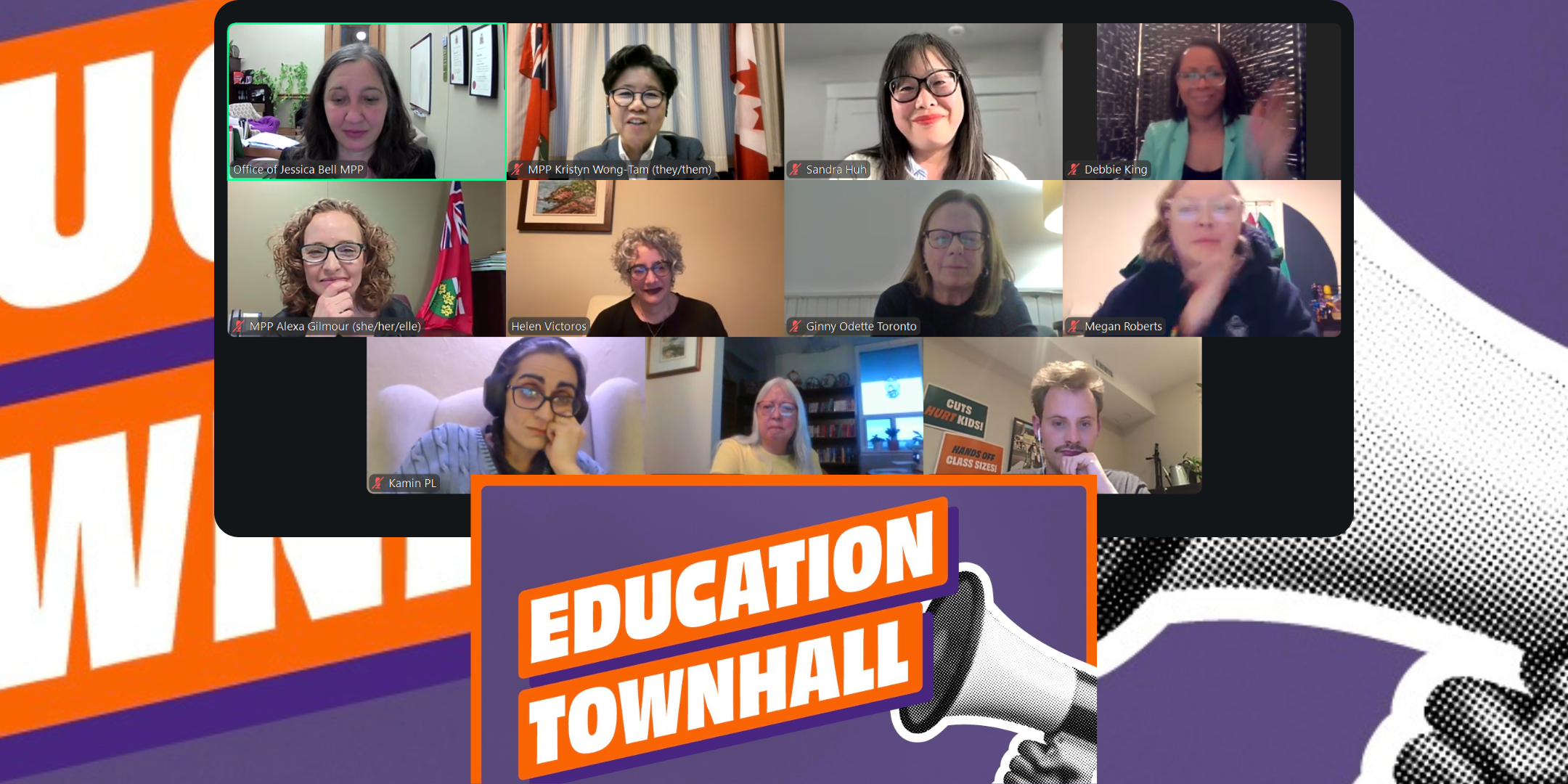
This week, I hosted an online education townhall to break down what the latest $900 million in cuts to education by the Provincial government will mean for kids, parents, and communities here in Toronto and across the province.
Areas impacted by these cuts will include:
- Staffing: Mainly teachers, with the TDSB cutting up to 600 staff this year alone.
- Special Education: Fewer support staff in the classroom, and the threat of closure and suspension of Grades for TDSB Model schools - that previously received additional support - such as Heydon Park and Eastdale Collegiate, which serve students with special educational needs.
- Safety for students: With less staff, violence in our schools is on the rise, and these cuts put this issue on track to go from bad to worse.
- Parent voices: Shifting power away from elected trustees who connect with parents and represent their concerns, and towards the Minister of Education. The changes proposed by the province in Bill 101 (see above) also give the Minister of Education broad new powers to approve school board budgets, override board decisions, determine how grades are calculated, and set rules around classroom materials and communications.
Thank you to every parent, advocate, and neighbour who joined us - and to our panelists who helped lay out the next steps we can take in fighting back against these cuts:
MPP Tom Rakocevic (Humber River-Black Creek), MPP Kristyn Wong-Tam (Toronto Centre), and MPP Alexa Gilmour (Parkdale-High Park), alongside elected TDSB Trustee Debbie King (Ward 9), Sandra Huh (Ontario Autism Coalition) and Helen Victoros (President, Elementary Teachers of Toronto).
I will continue to stand up for public education and our kids in the legislature, so that every child has the opportunity to learn in a safe and welcoming school.
If you’re worried about these latest cuts to education, you can access letter templates, petitions, and find events coming up near you, on our website. Click here or in the button below.
I also encourage you to contact our office with your thoughts and concerns at [email protected].
-
Healthy Air at Home webinar

Join the Toronto Home Energy Network and Clean Indoor Air Toronto for a free webinar on improving indoor air quality at home.
Learn practical tools and methods to monitor, filter, and improve the air in your home, followed by a live Q&A with Louise Hidinger, founder of Clean Indoor Air Toronto.
Tuesday, May 26
6:30–7:30 pm
For more info and to register click here or in the button below.